
Brakes in Charlotte
Fast, Honest, On-Site Brakes in Charlotte and Auto Repair Across Charlotte NC
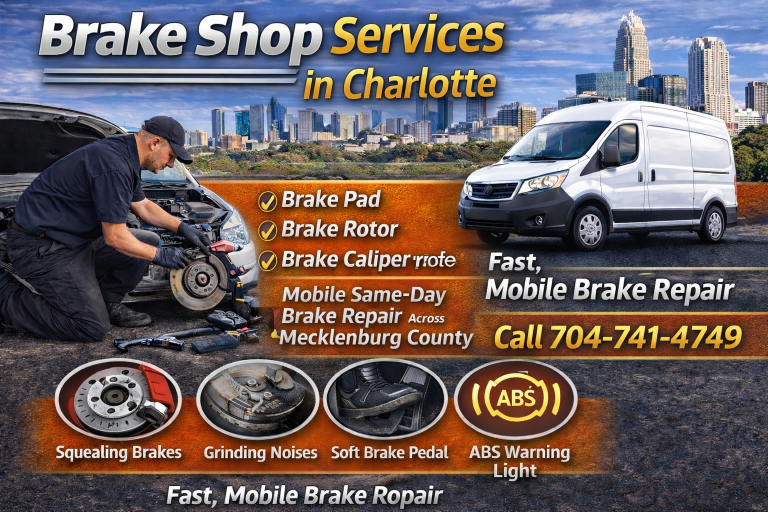
Brakes in Charlotte. Squealing, grinding, shuddering, a soft pedal or a pull to one side each point at a different part of the brake system. This page explains what each one means and how long you can safely leave it. Mobile brake diagnosis across Mecklenburg County. Call 704-741-4749.
What Your Brakes Are Telling You
Brakes rarely fail without warning. They change how they sound or how they feel first, and each change points somewhere specific. Learning to read them tells you whether you are looking at a routine pad replacement or something that should stop you driving today.
This page is the plain-language version of what a mechanic listens for. It will not replace an inspection, because pad thickness and rotor wear have to be measured, but it will tell you how worried to be before the van arrives.
A High Squeal That Comes and Goes
A steady high-pitched squeal when you press the pedal, often worse in the morning and quieter once the brakes warm up, is usually the wear indicator. That is a small metal tab built into the pad that touches the rotor when the friction material gets low. It is designed to make exactly that noise.
This is a warning, not an emergency. It means book the work in the next week or two, not that day. Leaving it for months is what turns a pad replacement into a pad and rotor replacement.
A squeal only in the first stop or two on a damp morning, that then goes away completely, is usually surface rust flashing off the rotor overnight. Charlotte humidity makes this common and it is normal.
A Deep Grind or Scrape
Grinding is a different noise and a different problem. A low metallic grinding or scraping, especially one you can feel through the pedal, usually means the friction material is gone and the pad backing plate is contacting the rotor face.
This one is urgent. Metal on metal cuts the rotor quickly, and stopping distance is already compromised. A car grinding on every stop should be driven as little as possible and looked at right away. It is also the point at which a straightforward job stops being straightforward, because the rotor is usually past saving.
A Shudder or Pulse Through the Pedal
If the pedal pushes back at your foot, or the steering wheel shakes while you slow from highway speed, the rotors are no longer running true. That is either thickness variation across the rotor face or genuine runout.
This is a comfort and control problem before it is a safety problem, but it gets worse rather than better. It is also the symptom most often misdiagnosed as a tire balance issue, because both show up at speed. The difference is simple: a brake shudder appears when you brake, a balance problem is there whether you brake or not.
A Pedal That Sinks or Feels Soft
A pedal that travels further than it used to, feels spongy, or slowly sinks toward the floor while you hold it at a light, points at the hydraulic system rather than the pads.
That means air in the lines, moisture in old fluid boiling under heat, a leaking flexible hose, a leaking caliper seal, or a master cylinder bypassing internally. Any of those deserve attention now. A sinking pedal is the one symptom on this page that can go from inconvenient to serious without another warning stage.
Pulling to One Side Under Braking
If the car steers itself toward one lane when you brake, one side is doing more work than the other. Usually that is a caliper not releasing, a seized slide pin holding a pad against the rotor, a collapsed flexible hose acting as a one-way valve, or uneven pad wear between the two sides.
You will often smell it before you are sure you feel it, because the dragging side runs hot. A hot wheel and a burning smell after a short drive is a strong sign of a caliper that is not letting go.
A Burning Smell After Driving
A sharp hot smell around one wheel after a normal drive, with no hard braking involved, usually means that brake is dragging. The pad is staying in contact with the rotor, the assembly is running far hotter than it should, and the heat is cooking the pad material and the grease in the hub.
Dragging brakes also cost fuel and wear tires unevenly, so the effects show up in places drivers do not connect to the brakes. If one wheel is noticeably hotter than the other three after a drive, that is the one to point out when you call.
The ABS Light
An ABS warning light does not mean you have no brakes. The normal hydraulic system works as usual, so the car stops. What you lose is the anti-lock function, which is the part that keeps you steering during a hard stop on a wet road.
Charlotte gets afternoon thunderstorms through much of the year, and a wet surface is exactly where ABS matters. Most ABS faults are a wheel speed sensor or its wiring rather than the module itself, and a scan tool reads the stored code and tells you which corner is reporting.
Worth knowing: an ABS light will fail a North Carolina safety inspection if the vehicle was built with the system. Safety items have no waiver route, so an ABS fault becomes a registration problem as well as a driving one.
The Parking Brake That Will Not Hold
North Carolina inspects the parking brake separately from the foot brake, and it has to hold the vehicle on a moderate incline. Plenty of Charlotte drivers never use theirs, which is why it fails.
A parking brake that is never applied lets its cables corrode and seize in place, and on cars with an electronic parking brake, the rear caliper actuator stiffens for the same reason. Using it regularly is the cheapest maintenance on the car. On a hill in Dilworth or off Providence Road it is also the thing standing between a parked car and a rolling one.
How Long Can You Leave It
A rough ordering, from least to most urgent.
A first-stop-of-the-morning squeal that clears is normal, and needs nothing. A consistent wear indicator squeal means book it within a couple of weeks. A brake shudder should be looked at within a month, sooner if it is getting worse quickly. A pull to one side or a hot wheel wants attention this week, because a dragging brake damages the rotor and the hub while you wait.
Grinding on every stop, a pedal that sinks while you hold it, or a fluid warning light on the dash are all today problems. Those three are the ones where driving on is a genuine risk rather than a cost.
What Happens on a Brake Inspection
A proper look at brakes is not a glance through the wheel spokes. Pad thickness gets measured, not estimated. Rotor thickness gets checked with a micrometer against the minimum figure stamped on the rotor itself, because a rotor below that number cannot legally or safely be reused. Slide pins come out to confirm the caliper floats freely. Hoses get squeezed and bent to find cracking and internal collapse. Fluid gets tested for moisture, because fluid that has absorbed water boils at a lower temperature and gives you that soft pedal on a long descent.
You get told the measurements. Numbers are harder to argue with than opinions, and they let you plan the next visit rather than being surprised by it.
Related Brake Pages
For what travels in the van and what can be done at the curb, see brake shop in Charlotte. For inspection rules, see brake repair in Charlotte. For corrosion and seized hardware, see auto brake repair Charlotte.
Get the Noise Identified in Charlotte
If you are not sure which of these your car is doing, describe it on the phone and we will tell you how urgent it sounds before anyone books anything.
Call 704-741-4749. Mobile brake diagnosis across Mecklenburg County, at your home, your workplace or wherever the car is parked.
Reliable and trustworthy mobile mechanic service!
Are you looking for a reliable mechanic to come to your place and help you with repairs on spot? –We are here to Help!



Copyright © 2026. Mr Mobile Mechanic. All rights reserved
This service sits under Brake Shop Charlotte, part of Mobile Mechanic Charlotte NC. For related work, see Brake Repair Charlotte.